Cranberries are the Wisconsin State Fruit
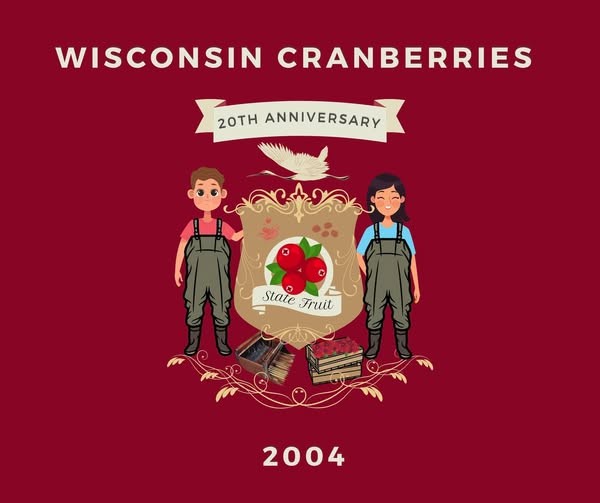
As of April 5, 2026, Wisconsin cranberry growers are celebrating 22 years since state of Wisconsin adopted the 2003 Wisconsin Act 174 and officially named cranberries as the Wisconsin state fruit.
This achievement was the result of a yearlong class project conducted by fifth-grade students from Kenosha County’s Trevor Grade School.
Upon doing their research, students from Trevor Grade School learned that Wisconsin cranberry growers were national leaders in the production of cranberries, growing more than 60% of the nation’s supply. This ultimately resulted in the cranberry being chosen over the cherry as Wisconsin’s state fruit.
To this day, more than 250 growers continue to produce cranberries on 21,000 acres in 20 counties across central and northern parts of the state. Cranberries are also the state’s largest fruit crop in terms of both size and economic value.
For more information, and to learn about Wisconsin’s state fruit, visit Wiscran.org.
Have you heard the “buzz”?
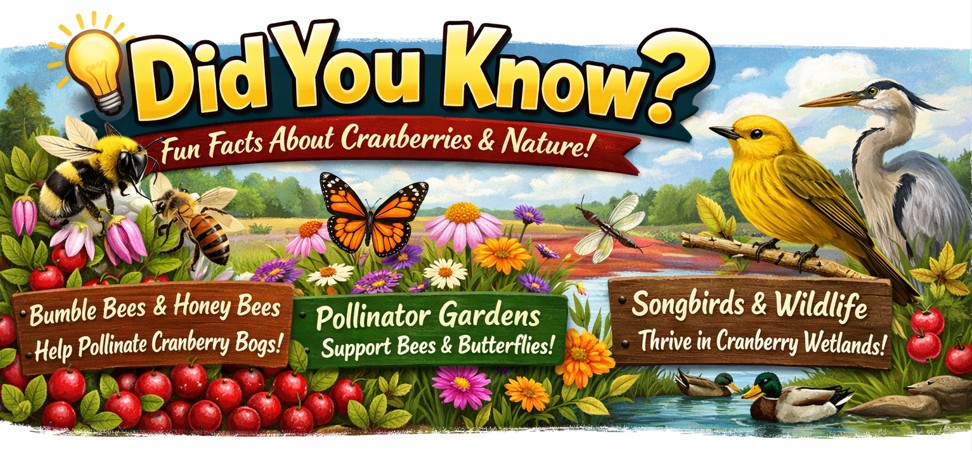
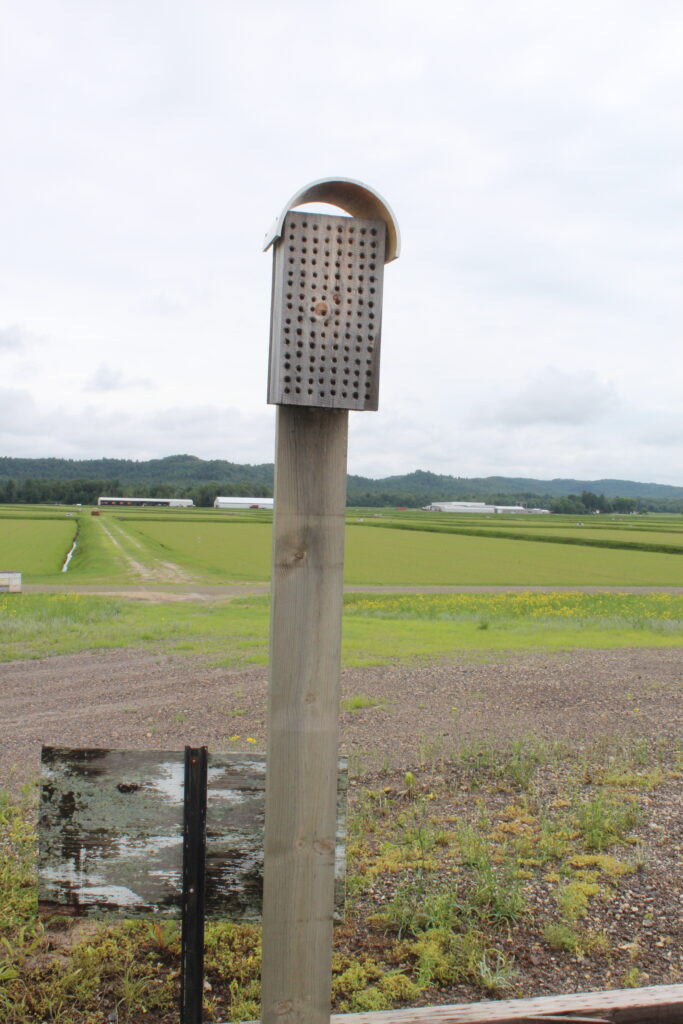
Habelman’s is finding ways to encourage local fauna, including bees, to live with us here on the marsh. Bumble and Mason bee houses, built by our amazing staff, can be found around the marsh.
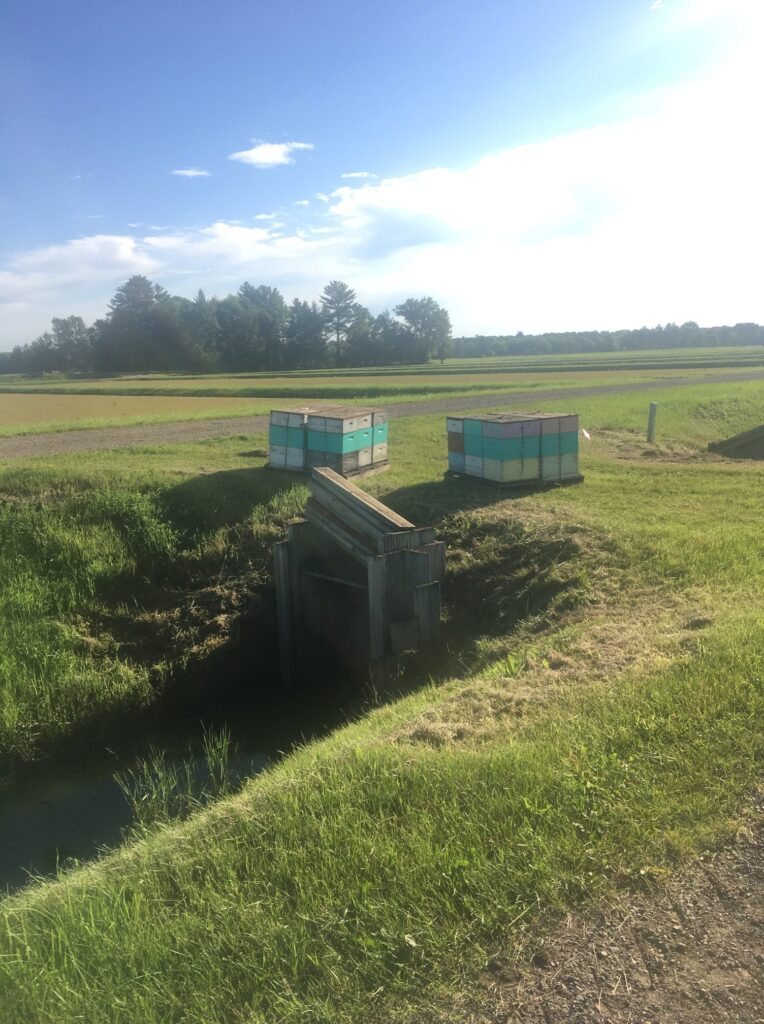
There are millions of blossoms to be pollinated and the local bee population, unfortunately, cannot do it alone. So, Habelman’s enlists the help of over 2200 colonies of bumble and honeybees to pollinate our cranberry blossoms each season.
That’s a lot of buzz!
Our crew is doing some amazing things around the marsh to support our local songbird population. We just love their creativity and passion! These houses were hand-dipped to create a beautiful pattern. Over 20 songbird houses can be found throughout the marsh and are very popular with the birds!
Busy Bees and Pretty Pink Petals!
If you look real close, you can see a few pretty pink petals starting to open. Time for the bees to get busy!
Did you know…Bees are trichromatic – just like humans? However, humans base their color vision on the colors red, green and blue, where as bees base their color vision on blue, green and UV. Bees cannot see red, but visit red flowers because they are able to see the UV markings on the petals.